
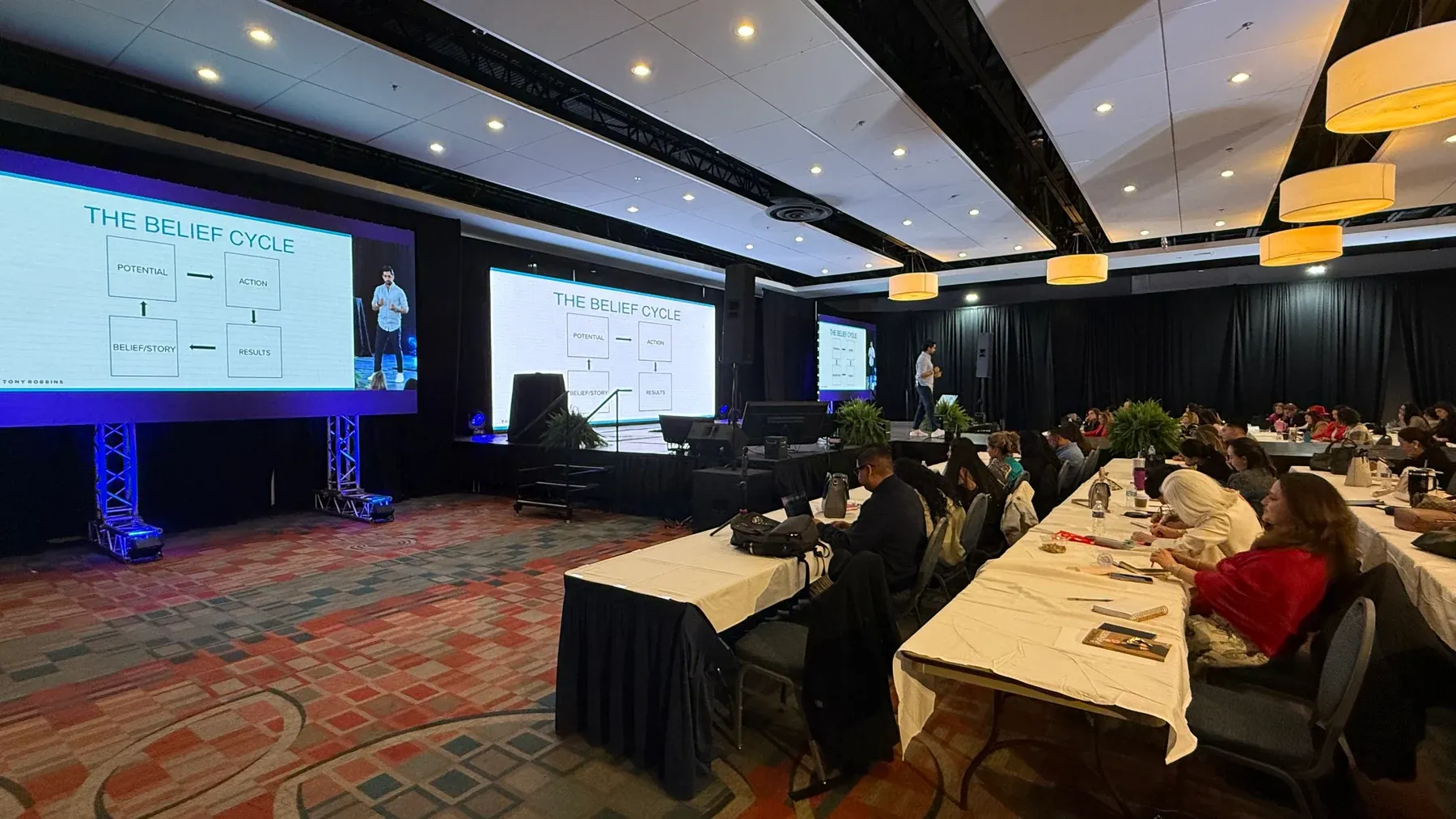
The production process · Miami
How event production works
You bring the idea. Event production turns it into the sound, screens, lighting, stage and live operation your audience experiences. Here is how the process comes together, what your team needs to decide, and where a production partner helps.
A conference, product launch, gala or social celebration can follow the same broad path, with a different technical scope. This guide explains the work behind the event without asking you to become the sound engineer or learn every piece of equipment.
Start with the event you want people to experience.
Before choosing equipment, describe the moments that matter. Is the audience listening to a presentation, watching a reveal, joining a celebration or taking part remotely? A useful brief connects those moments to a date, venue, approximate guest count and budget range.
For example, an awards evening might need clear speeches, a film that everyone can see, walk-on music and a change into a live performance. Each moment gives the production team a question to resolve before recommending equipment and crew.
Give planning and production clear responsibilities.
Event planning may cover invitations, catering, venue selection and the overall guest schedule. Technical production connects the AV systems, staging, content, crew and cues that bring the live program together. Confirm where one provider’s responsibilities stop and another’s begin.
Job titles vary with the show. Ask who owns the technical plan, who operates each system, and who approves changes. A small meeting may combine responsibilities; a larger production may need separate audio, video, lighting and show-calling roles. Write down the decision path so the crew is not taking conflicting instructions.
Make the plan fit the actual room.
Share the room plan before treating an AV quote as final. The production team needs to understand where the audience, stage, screens and control position can go, and how equipment gets into and out of the space.
For a Miami hotel ballroom, ask the venue about loading access, service elevators, outside-vendor requirements, available production hours and who approves technical work. For an outdoor or partially outdoor event, agree on a weather decision process with the venue and appropriate specialists. Do not assume indoor equipment or an indoor schedule transfers unchanged.
Screens should be selected around the content and the audience’s viewing positions. A detailed presentation and a large scenic background serve different purposes. The venue and qualified technical team should confirm power, rigging, support methods and any applicable approvals.
Turn the conversation into a scope everyone understands.
The proposal should connect the program to the equipment and people required. Check whether delivery, installation, testing, operators, rehearsal coverage and breakdown are included. An equipment rental and an operated production can look similar on a short equipment list while offering very different support.
At BE Productions, the available production services include audio, lighting, LED displays, video, staging, power coordination and live operation. The agreed event scope determines the combination. You can discuss a focused need or a connected production for a corporate, social or community event; do not assume every service is automatically included.
Keep a written record of additions and their effect on budget, crew and timing. A new remote speaker, another room or a longer program can change the technical plan even if the headline guest count stays the same.
Get the people, content and cues ready together.
Gather the approved slides, videos, music, names and presentation order in one place. Name the final version and the person who can approve it. Ask the production team which file formats and delivery method they need, rather than assuming a link will work at the venue.
The audience agenda says what happens. The run of show adds the working instructions: who is on stage, which microphone they use, what appears on screen, and who calls each change. Include transitions as well as the main presentations. Schedule a rehearsal around the moments that need coordination.
Build, test, rehearse—then open the doors.
Setup turns the approved plan into a working room. The crew positions and connects the systems, checks the content and tests the routes the show depends on. A useful rehearsal follows the actual sequence, including a presenter walking on, a video with sound, a panel change or a remote contribution.
Give speakers time with the microphone they will actually use. A handheld, lectern microphone and wearable microphone each need a different technique. The check should include how the presenter moves and where they face, not just whether a microphone is switched on.
During the event, the designated lead coordinates changes while the operators manage the live systems. Agree in advance how to handle a delayed speaker or unavailable file and which critical functions need an alternative. Backups should match the event’s priorities; no plan removes every possible interruption.
Finish the event, then close the loop.
The job does not end with the final applause. Confirm when the crew may begin breakdown, who authorizes room handover, and which recordings or other deliverables are part of the agreement. Those details belong in the plan before show day.
Afterward, compare the result with the original brief. Could everyone follow the program? Were the key moments clear? Which content, room or timing decisions should change next time? Keep the useful notes with the next brief instead of starting from scratch.
When you are ready to speak with BE Productions, send what you know—even if the idea is still taking shape. The date, location, audience and program give the team a useful starting point for discussing the production.
Sources and further reading
These references support the guide’s general planning practices. Scope and technical decisions are confirmed for each event.
FAQ
A few questions before you begin
What does an event production company do?
It plans and coordinates the technical systems and people supporting the live experience, such as sound, screens, lighting, staging and operation. Confirm the exact services, responsibilities and deliverables in your proposal.
Is event production the same as event planning?
The responsibilities overlap, but they are not identical. A planner may manage guests, catering and the wider schedule; the production team focuses on the technical setup and live program. Agree who owns each task.
How far ahead should I contact the production team?
Start when you have a date, a venue or shortlist, and a rough program. The lead time depends on complexity, venue access, content and availability. A fixed number of weeks would not fit every event.
Can this process work for a social event?
Yes. The same questions about people, place, content, setup and operation apply to social celebrations and community events. The production scope should reflect the event rather than copy a conference package.
Keep shaping your event
An idea is enough to start.
Share your date, venue or shortlist, audience and the moments you have in mind. BE Productions can help you discuss the technical scope.
Tell us about your event