
Event audio production · Miami
Event audio production for clear speech and controlled show sound
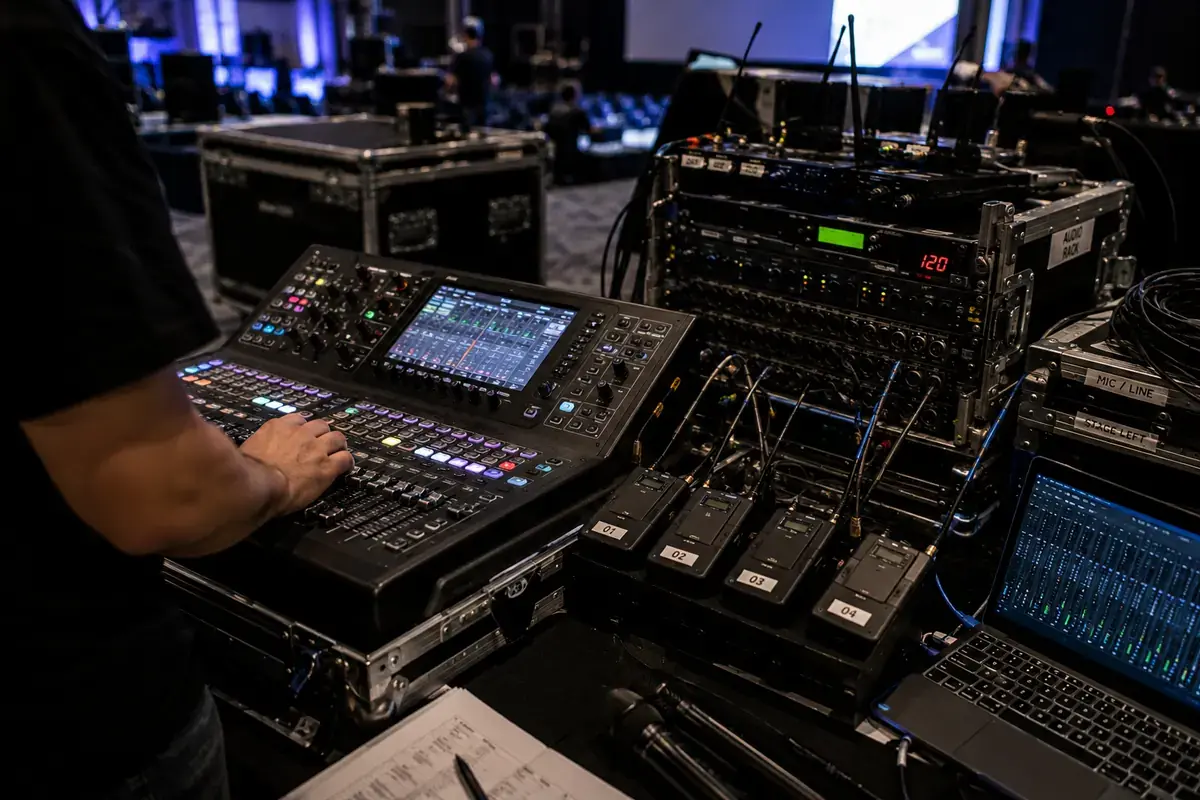
Guests should understand every speaker without thinking about the sound system. BE Productions plans reinforcement, wireless microphones, playback, monitoring, mixing, and signal feeds around the room, audience, agenda, and broadcast requirements.
- Professional sound systems and wireless microphone workflows
- Digital mixing, playback, monitoring, and show operation
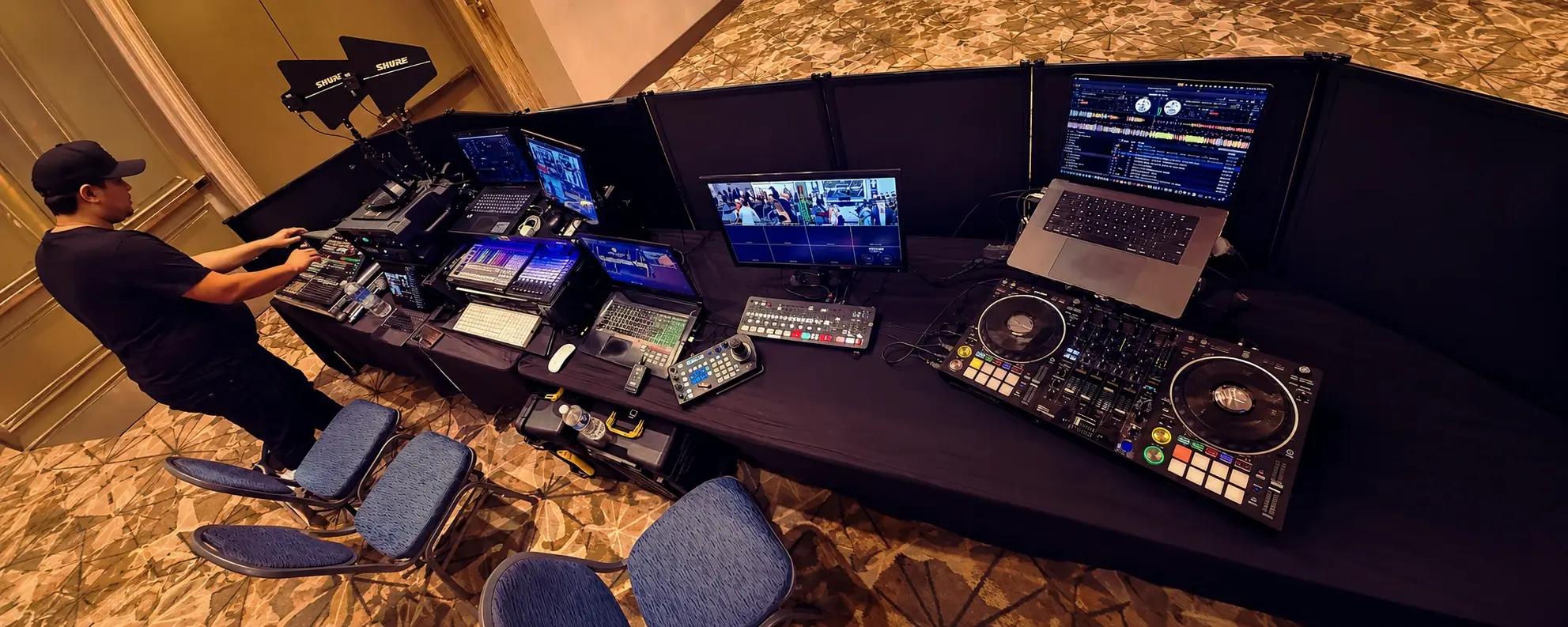
- Audio feeds for recording, cameras, livestreams, and remote guests
Planning information
Audio designed around intelligibility and show flow
The system is selected after considering room acoustics, seating, speaker positions, content, stage activity, and every destination that needs audio.
Sound reinforcement
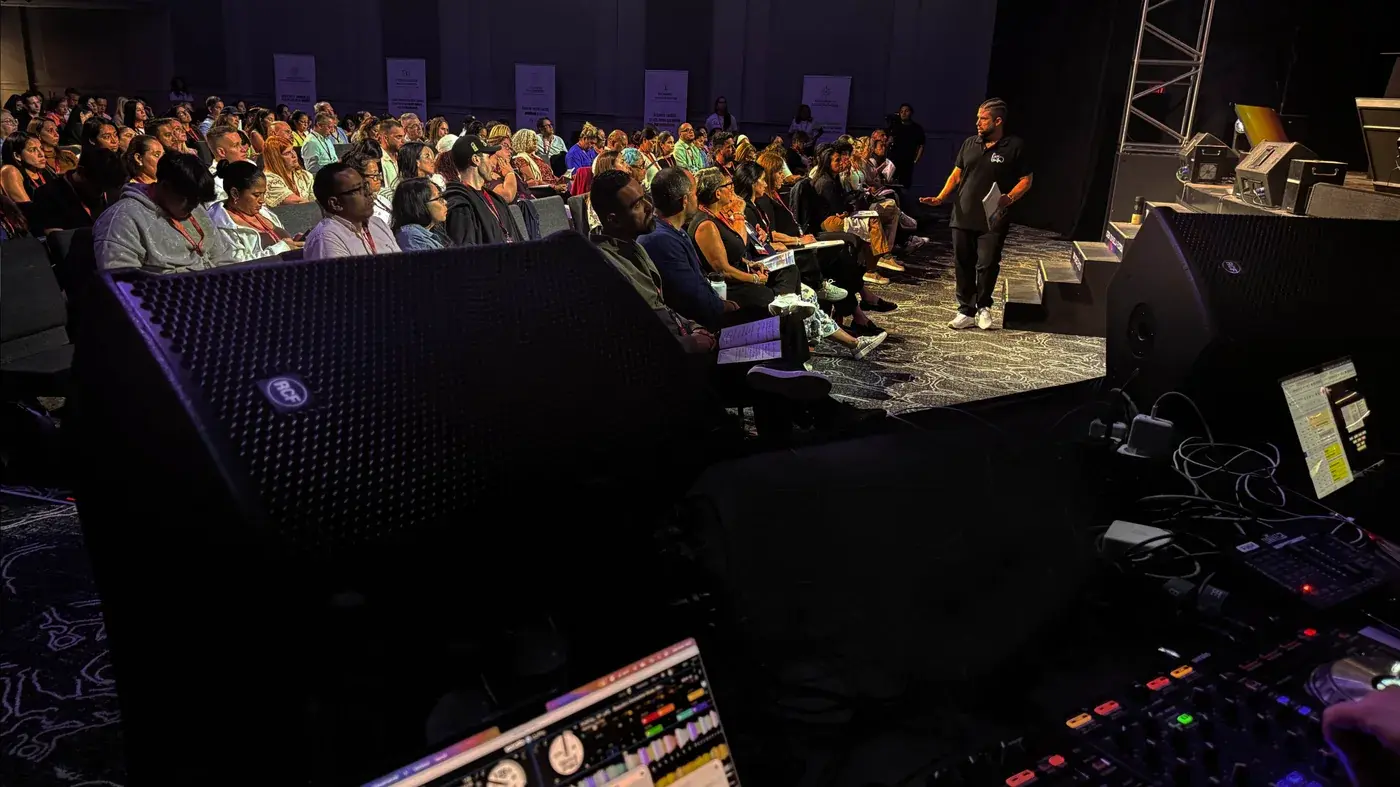
Speaker systems planned for appropriate audience coverage, clear voice reproduction, playback, and program material.
Wireless microphones
Handheld, lavalier, headset, and related workflows coordinated with the agenda, presenters, frequencies, and backup needs.
Mixing and playback
Digital mixing, cue playback, stage monitoring, and live adjustments by the audio team.
Recording and broadcast feeds
Purpose-built signal paths for cameras, livestream encoders, recording systems, press, or remote participants.
Audio in focus
Clear voices supported by a disciplined signal path.
The audience hears the result, not the workflow. Coverage, wireless coordination, mixing, playback, monitoring, and broadcast feeds must work as one dependable audio system.
Start with the voices and destinations
A microphone count alone does not define the audio system. We review who speaks, where they move, how transitions happen, what media plays, and whether the sound also feeds a stream or recording.
Room shape, surfaces, ceiling, audience density, noise limits, and venue rules influence coverage and placement. Early coordination with video and streaming prevents last-minute signal requests.
Details that improve the audio plan
- Room layout, audience size, stage positions, and venue restrictions
- Speaker count, microphone preferences, panels, and Q&A format
- Walk-in music, videos, stingers, performances, and playback cues
- Livestream, recording, translation, press, and remote-call feeds
Planner decision guide
Audio for speech-led and live programs
The approach can support focused executive rooms or larger multi-source productions.
- Corporate conferences and general sessions
- Panels, keynotes, and executive meetings
- Galas, awards, and branded presentations
- Livestreams and hybrid productions
- Product launches, performances, and audience Q&A
What determines a clear, reliable audio system
Coverage and room acoustics
Audience layout, room shape, reflective surfaces, stage location, and noise limits guide loudspeaker placement and tuning.
Microphone and wireless plan
Speaker count, panels, audience Q&A, room movement, frequency coordination, and backups determine the microphone package.
Playback and show transitions
Walk-in music, videos, stings, presentation audio, comms, and cueing are organized around the run of show.
Broadcast, recording, and accessibility feeds
Livestream, recording, press, interpretation, and assistive-listening destinations receive purpose-built, monitored audio feeds.
FAQ
Event audio questions
How many microphones should we request?
That depends on the number of simultaneous speakers, panel and Q&A format, changeovers, room movement, and backup plan. An agenda and speaker list help define the count.
Can the same audio feed a livestream or recording?
Yes, but the broadcast feed should be planned as its own destination. Online viewers may need a different mix from the audience in the room.
Can you provide music and video playback through the system?
Playback can be included and coordinated with the video department and run of show. Final media files and cue expectations should be reviewed before the event.
How is speaker placement planned for even room coverage?
Placement considers room geometry, seating, stage location, acoustics, sightlines, level limits, delay timing, and the balance between speech clarity and program material.
Do wireless microphones require frequency coordination?
Yes. Available spectrum, venue systems, nearby events, microphone count, device type, antenna distribution, backups, and local operating conditions should be reviewed before show day.
How much time should be reserved for soundcheck?
Soundcheck time depends on rooms, microphone count, panels, performances, playback, remote contributors, and broadcast feeds. Complex programs benefit from a separate technical rehearsal before presenters arrive.
Can interpretation or assistive-listening audio be integrated?
Interpretation and assistive-listening workflows can be coordinated when the venue system, languages, audience needs, equipment, vendors, distribution method, and signal paths are identified early.
Connect audio to every part of the show
Build the audio plan around your agenda
Share the venue, room, audience, speakers, media, and broadcast needs so the proposal reflects the real show.
Request an audio proposal