
Event lighting · Miami
Event lighting design and live operation for Miami productions
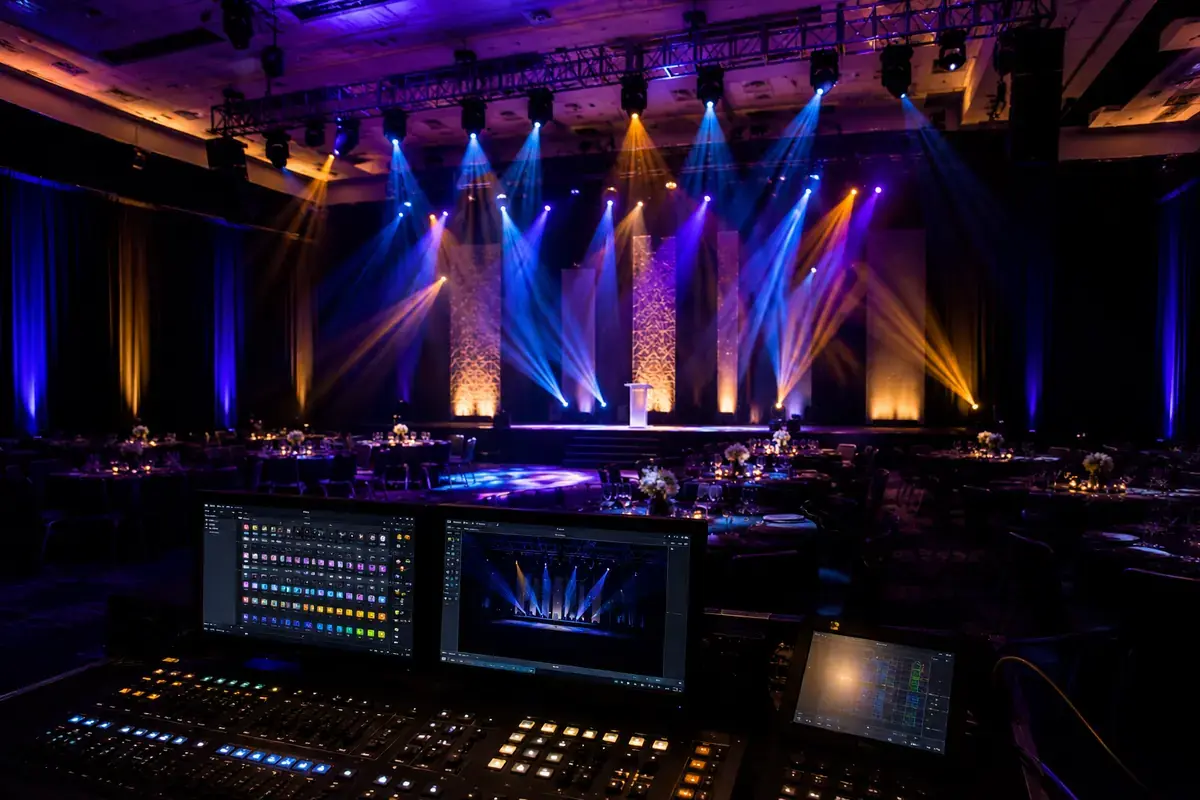
Lighting establishes focus, supports the camera image, and changes how a room feels. BE Productions combines lighting design, programming, equipment, and show operation with the stage, video, audio, and schedule.
- Stage, room, scenic, and branded-environment lighting
- Programming and live cue operation
- Coordination with cameras, LED displays, staging, and power
Planning information
Lighting built around the event format
A keynote, gala, product reveal, and livestream need different visual priorities. The lighting plan starts with what guests and cameras must see.
Speaker and stage lighting
Focused illumination for presenters, panels, performances, lecterns, and scenic elements.
Room and architectural treatment
Color, texture, and accent lighting that helps define guest areas and support the event identity.
Programming and cues
Looks and transitions programmed around walk-ins, presentations, reveals, awards, and other show moments.
Live operation
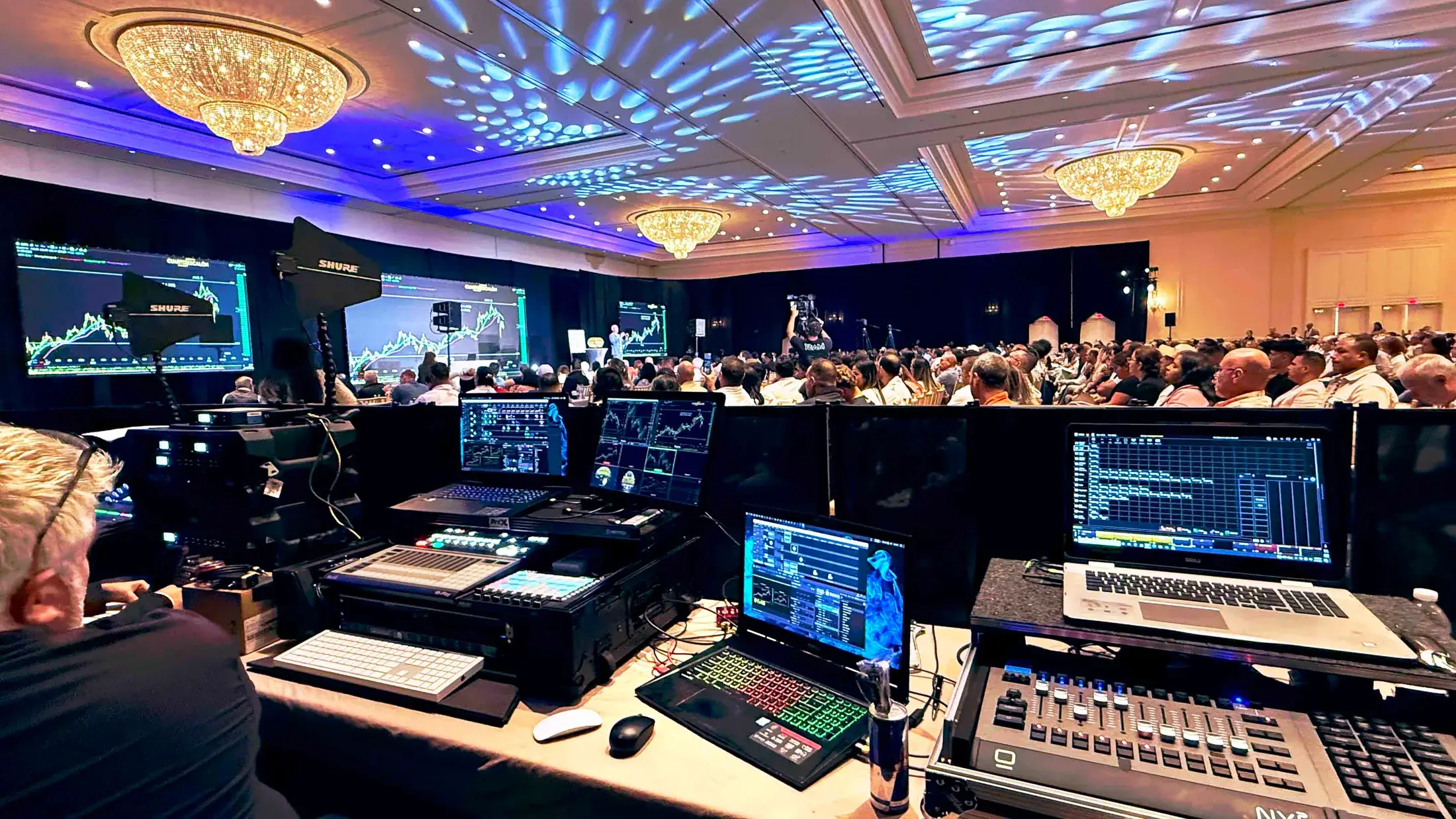
On-site console operation and coordination with the show caller, video, audio, and stage teams.
Lighting in focus
Color, direction, and contrast that shape the room.
Lighting establishes hierarchy before a speaker says a word. The strongest designs support faces, architecture, branding, screens, and camera exposure at the same time.
Balance the room, the stage, and the camera
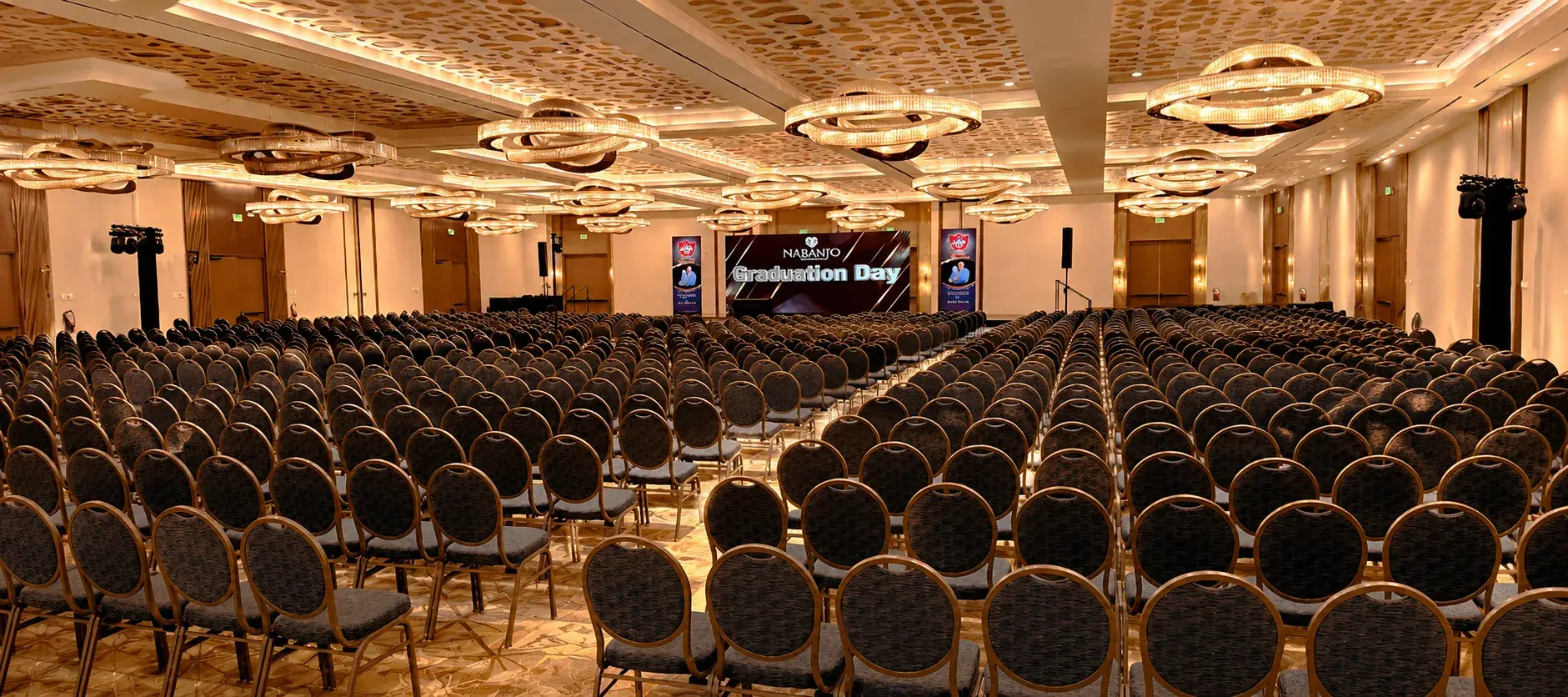
Lighting should support visibility without washing out screens, scenic elements, or projected content. Camera-based events also require deliberate color, intensity, and facial coverage.
Venue architecture, ceiling height, rigging access, room turnover, and power availability influence fixture placement and labor. Reviewing those constraints early produces a cleaner plan.
Inputs that shape the lighting design
- Event agenda, stage plan, speaker positions, and key moments
- Brand colors, scenic references, and desired room atmosphere
- Camera, LED, projection, and livestream requirements
- Venue drawings, rigging points, power, and production schedule
Planner decision guide
Lighting for business and live experiences
The system can be scaled to the room and the moments that need emphasis.
- Conferences, keynotes, and executive meetings
- Galas, awards, dinners, and celebrations
- Product launches and brand activations
- Livestreams, recordings, and media events
- Stages, scenic environments, and audience areas
What shapes an effective event-lighting design
Speaker and camera visibility
Stage positions, skin tones, camera exposure, and screen brightness guide front-light coverage and color balance.
Scenic and brand atmosphere
Brand colors, scenic elements, room architecture, and audience moments shape the visual palette and fixture selection.
Fixture positions and venue limits
Ceiling height, rigging points, floor space, power, ambient light, and venue rules determine practical placement.
Programming, cues, and operation
A clear run of show connects keynote looks, walk-ins, awards, video moments, and room transitions to live operation.
FAQ
Event lighting questions
Can lighting match our brand colors?
Brand colors can guide the design, subject to how each color reproduces on fixtures, scenic materials, cameras, and screens. References and brand guidelines help during planning.
Is a lighting operator included?
Live operation can be included based on the event format and cueing needs. The proposal should define setup, programming, rehearsal, show coverage, and strike.
Can lighting be designed for video recording?
Yes. Camera placement, exposure, color, screen content, and speaker positions can be considered as part of the lighting plan.
What is the difference between stage lighting and room uplighting?
Stage lighting supports speaker visibility, scenic focus, cameras, and cues. Uplighting adds color and depth to walls or architectural surfaces. Many events use both for different purposes.
How much event lighting does a ballroom need?
The fixture count depends on room dimensions, ceiling height, stage size, scenic elements, camera coverage, ambient light, desired looks, power, and available rigging positions.
Can haze or special effects be included with event lighting?
Effects can be evaluated, but venue approval, fire and life-safety rules, detectors, permits, surface protection, operator requirements, and guest comfort must be confirmed first.
Does event lighting require rigging and dedicated power?
Some designs can be ground supported, while others require approved rigging points. Fixture loads, control positions, cable routes, distribution, and venue electrical rules are part of the lighting plan.
Create a lighting plan for the room and the show
Share your venue, schedule, stage design, brand direction, and camera needs so we can define the right scope.
Request a lighting proposal